

EN 50291 Explained: The Real Requirements of the European Carbon Monoxide Alarm Standard
Carbon Monoxide (CO) is known as the "silent killer" — colourless, odourless, and non-irritating, yet capable of claiming lives without warning. In Europe, thousands of injuries and fatalities from CO poisoning occur every year. EN 50291 is the lifeline standard for carbon monoxide alarms across the European market.
The market is flooded with products claiming to "meet the standard," leaving consumers and procurement professionals struggling to distinguish genuine compliance from marketing claims. This article provides a deep technical breakdown of EN 50291, revealing what the standard truly demands and how the landmark 2018 update changed the landscape.
1. What Is EN 50291 and Why Does It Matter?
EN 50291 is a mandatory product safety standard published by the European Committee for Electrotechnical Standardization (CENELEC), formally titled "Electrical apparatus for the detection of carbon monoxide in domestic premises." It governs every aspect of CO alarm design, manufacturing, testing, and performance.
A carbon monoxide alarm that has not passed EN 50291 certification cannot be legally sold in the European market. This standard directly impacts:
Market access (prerequisite for CE Marking / UKCA Marking)
Product liability risk
Retailer and e-commerce platform compliance
Insurance claim validity
Consumer trust and brand reputation
2. The Two Parts of EN 50291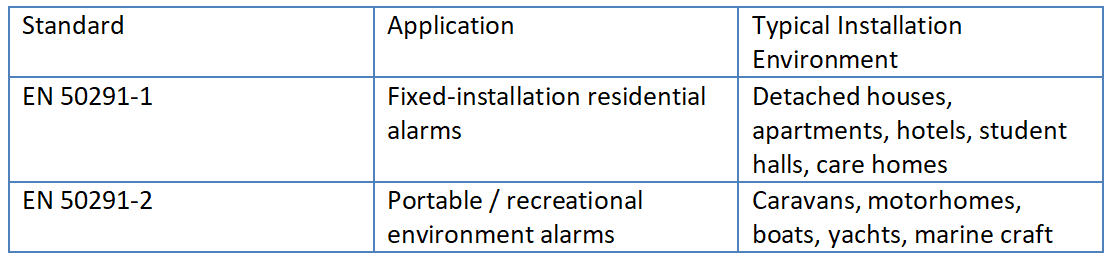
Key Distinction: EN 50291-2 products must withstand more rigorous environmental stresses — including vibration, wider temperature fluctuations, and constantly changing mounting conditions. If you are sourcing alarms for caravans or boats, you must verify EN 50291-2 certification, not just Part 1.
3. The 2018 Update: What Changed from the 2010 Edition?
EN 50291-1:2018 replaced the previous EN 50291-1:2010+A1:2012, introducing a series of mandatory new requirements. Here are the core changes: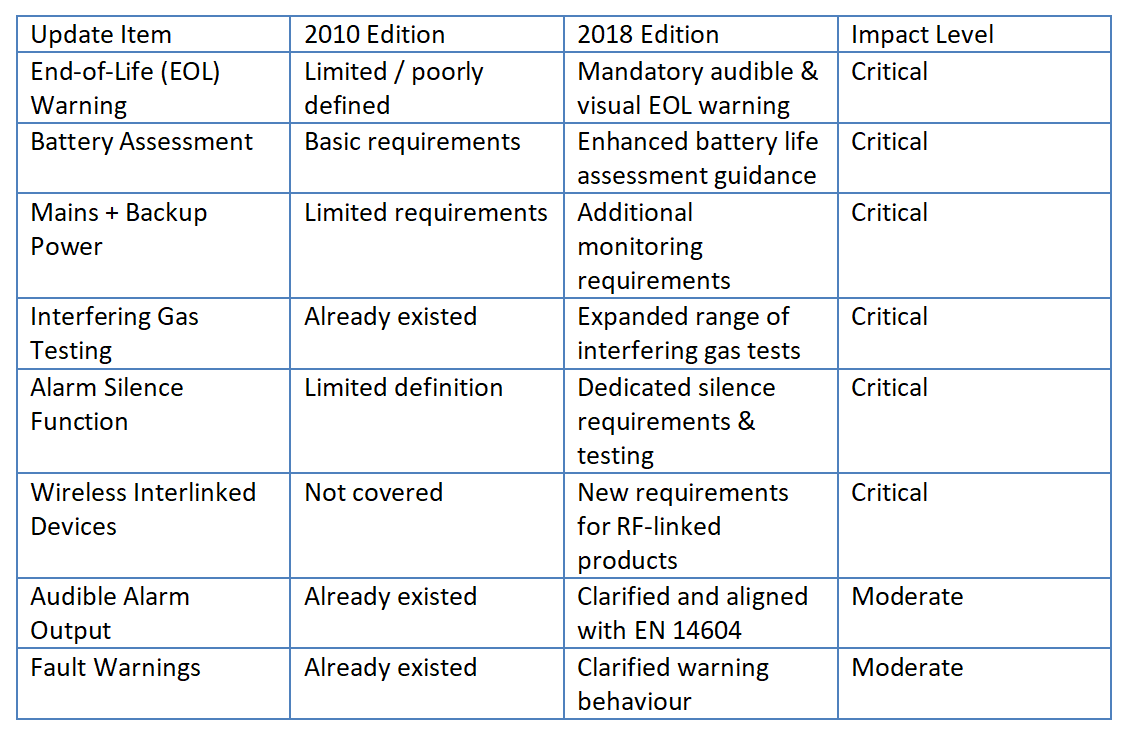
The Most Significant Change: The End-of-Life (EOL) Warning. Before the 2018 edition, some alarms could silently "die" when the sensor failed, leaving occupants unaware. The standard now mandates that alarms must emit a distinct audible and visual warning signal when they reach the end of their service life (typically 10 years), explicitly instructing the user to replace the device.
4. Core Technical Requirements in Detail
4.1 CO Response Accuracy and Alarm Thresholds (Critical)
The core objective of the standard is to alarm before danger becomes critical, while avoiding nuisance alarms. EN 50291 bases its alarm thresholds on the effect of CO exposure on human blood carboxyhemoglobin (COHb) levels. At approximately 10% COHb, occupants begin to experience mild symptoms (e.g., headache) but still retain the ability to evacuate.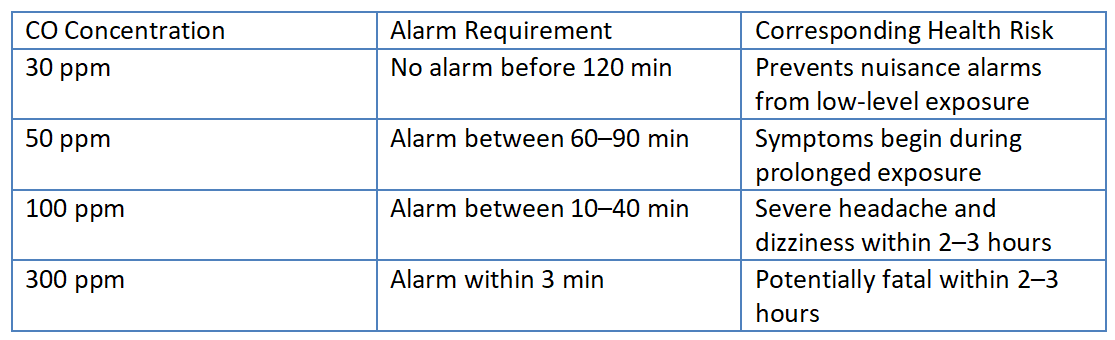
Why No Alarm Below 30 ppm? Normal environments may experience brief low-level CO events (e.g., traffic exhaust backdraft, momentary gas cooker ignition). The standard must filter out these "interferences" to maintain user trust and prevent alarm fatigue.
4.2 Audible Alarm Performance
Minimum Sound Pressure Level: 85 dB(A) at 3 metres (the 2018 edition extended the test distance from 1 metre to 3 metres, aligning with EN 14604 for smoke alarms)
Alarm Tone Pattern: The standard defines specific alarm signal characteristics to ensure clear differentiation from smoke alarms
4.3 Power Supply and Battery Reliability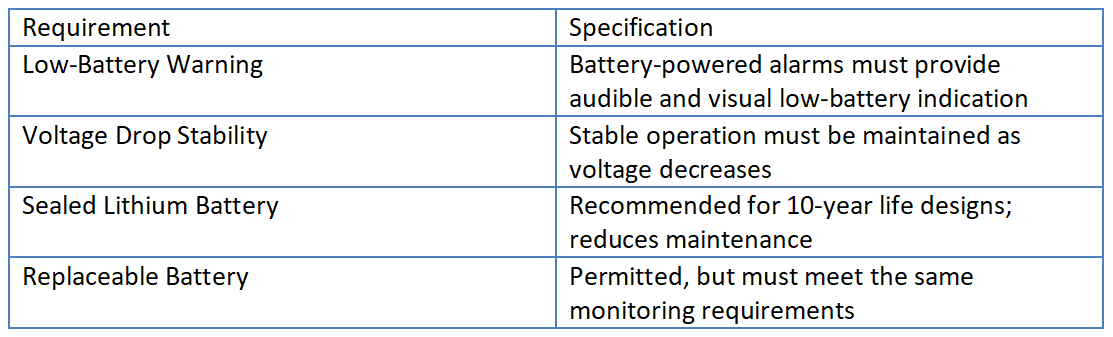
4.4 Fault Detection and Self-Diagnostics
Modern CO alarms must possess "self-health-check" capabilities:
Sensor Fault Indication: Warning issued when the electrochemical sensor fails
Electronic Malfunction Warning: Alert triggered by circuit anomalies
End-of-Life Notification: Mandatory reminder to replace the device at end of service life
Self-Test Function: Users can manually verify device status
4.5 Environmental Adaptability Testing
Alarms must remain reliable under the following conditions:
High / Low Temperature Testing: Simulating different climate zones
Humidity Resistance: Near bathrooms and other humid environments
Thermal Cycling: Stability under rapid temperature changes
Electromagnetic Compatibility (EMC): Immunity to household appliance interference
4.6 Interfering Gas Immunity
Alarms must not false-alarm due to the following common gases: methane (natural gas), ammonia, ethanol / alcohol vapours, and various aerosols.
5. EN 50291 vs UL 2034: European vs. North American Standards
If you serve both European and North American markets, you must understand the fundamental differences between the two standards: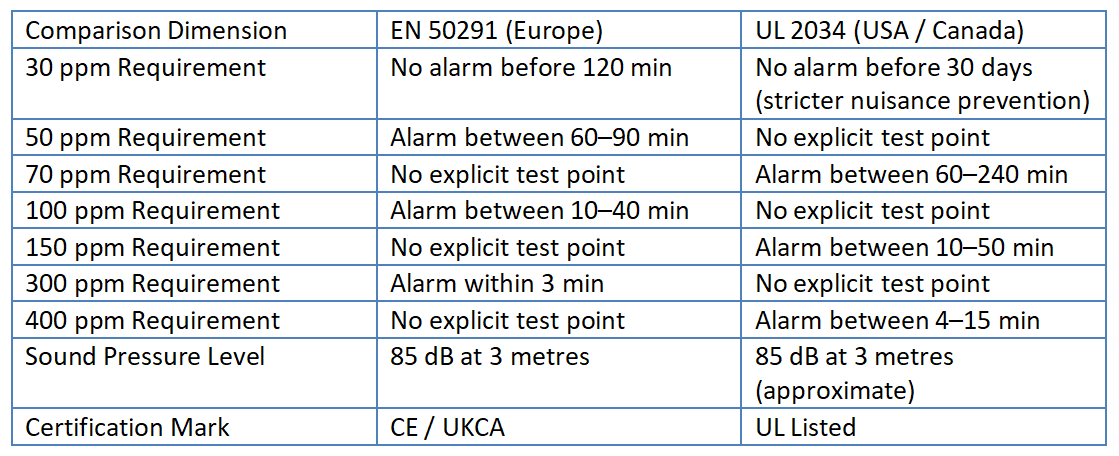
Key Takeaway: UL 2034 employs a "stepped" concentration approach (70 / 150 / 400 ppm), while EN 50291 uses a different concentration gradient (30 / 50 / 100 / 300 ppm). Both are designed around the 10% COHb human safety threshold but use different test methodologies. A product certified to EN 50291 does not automatically meet UL 2034 requirements, and vice versa.
6. How to Identify a Genuine EN 50291-Compliant Product
Mandatory Marks to Verify:
CE Marking (EU market) or UKCA Marking (UK market)
Standard number: EN 50291-1:2018 or EN 50291-2:2019
Third-party certification body marks: e.g., TÜV, SGS, BSI Kitemark, Intertek
Model identification and manufacturer information
Red Flags to Watch For:
Claims of "compliant with EN 50291" without specifying the edition year
Absence of third-party certification marks (manufacturer self-declaration only)
Abnormally low pricing (compliant electrochemical sensors and certification costs have a floor)
No end-of-life warning function (indicates an obsolete or non-compliant product)
7. Product Selection Guide: Best Choices by Application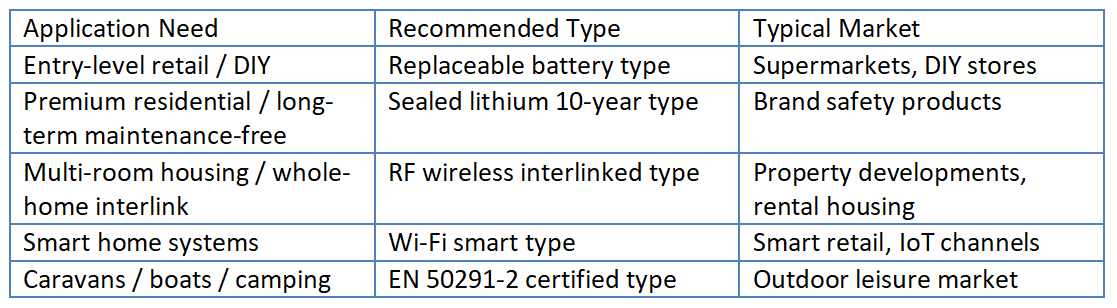
Professional Recommendation: For European residential projects, we strongly recommend models with sealed lithium battery + 10-year service life + end-of-life warning. Although the upfront cost is slightly higher, this configuration dramatically reduces maintenance costs and ensures compliance throughout the entire product lifecycle.
8. Installation Location Guidance (Aligned with Standard Principles)
While EN 50291 primarily governs product performance rather than installation location, the following guidance aligns with European building regulations and manufacturer recommendations:
Install one alarm near every sleeping area
Install at least one alarm on every floor (including floors without bedrooms)
Install in rooms containing fuel-burning appliances (gas boilers, fireplaces, cookers)
When installed in the same room as the fuel appliance: follow manufacturer-specific height requirements (typically 1–3 metres from floor level, as CO has similar density to air)
Avoid: directly above steam sources, near ventilation outlets, or in dead-air corners
9. Frequently Asked Questions (FAQ)
Q1: What is the difference between EN 50291 and BS EN 50291?
BS EN 50291 is the UK national adoption of the European standard. The technical content is substantially identical to EN 50291, but certification procedures and marking requirements differ (UKCA vs. CE). Products sold in the UK market require BS EN 50291 compliance plus UKCA marking.
Q2: What standards must a combined smoke + CO alarm meet?
Combined alarms must hold dual certification: EN 14604 (smoke alarm) and EN 50291 (CO alarm).
Q3: What is the typical service life of an EN 50291 alarm?
Electrochemical sensors are designed for 7–10 years. The 2018 edition mandates that devices must emit an end-of-life warning when they reach the end of their service life.
Q4: My existing alarm is marked EN 50291-1:2010. Is it still usable?
Installed 2010-edition alarms that are functioning correctly typically do not require immediate replacement. However, all new procurement should target 2018-edition certified products for enhanced safety protection, particularly the end-of-life warning function.
Q5: Can a carbon monoxide alarm replace a smoke alarm?
Absolutely not. CO alarms detect a colourless, odourless gas; smoke alarms detect combustion particles. The two functions are entirely different, and both must be installed in residential premises.
Conclusion
The publication of EN 50291-1:2018 marked a new era in European carbon monoxide alarm safety. Updates including the end-of-life warning, expanded battery assessment, and wireless interlink specifications bring the standard closer to real-world safety demands.
For manufacturers, understanding these technical details is the foundation of product compliance. For consumers and procurement professionals, verifying EN 50291-1:2018 certification together with third-party certification marks is the only way to ensure the product you purchase will genuinely save lives when it matters most.
Carbon monoxide does not give you a second chance. Choosing a truly standards-compliant alarm is choosing life insurance.
About Heiman
HEIMAN, a specialized manufacturer of fire safety alarms and smart home sensors with 21+ years of expertise, was founded in 2005 in Shenzhen, which serves as both our headquarters and a smart manufacturing base. Beyond the headquarters, we have a domestic network of 31 offices; internationally, we have a factory in Vietnam, forming a dual-smart-manufacturing-base layout integrating Shenzhen and Vietnam. We maintain an annual production capacity of 15 million units. We own a 1,000-square-meter laboratory accredited by CNAS ISO7025, as well as an Intertek / ETL Recognized SATELLITE Laboratory. Additionally, we hold a portfolio of over 1,000 national and international patents and certifications, serving a global clientele across more than 100 countries.
We provide customized R&D solutions encompassing ID design, hardware development, software programming, cloud deployment, testing, and customer support, delivering a one-stop service package tailored to unique customer needs.
*Technical content in this article is compiled from EN 50291-1:2018, EN 50291-2:2019, and CENELEC technical documentation. For specific certification requirements, please refer to the latest edition of the standard and guidance from Notified Bodies.