

Smoke Alarm Beeping? What Does the Chirping Mean and How to Fix It
Is your smoke alarm beeping and you don’t know why?
A smoke alarm can make several different sounds, and not every beep means there is a fire.
A single periodic chirp may indicate a low battery or maintenance issue, while a loud, continuous alarm may indicate that smoke has been detected.
Understanding the difference is important for every North American homeowner.
This guide explains what common smoke alarm sounds can mean and what you should do when your alarm starts beeping.
What Does a Beeping Smoke Alarm Mean?
A smoke alarm may beep or chirp because of:
- Low battery
- End-of-life condition
- Sensor or system fault
- Power interruption
- Dust or contamination
- Environmental interference
- Actual smoke or fire
The exact sound pattern varies between manufacturers and models.
Always check the product manual for the specific alarm’s sound and LED indicators.
Smoke Alarm Chirping vs. Fire Alarm
The first thing to determine is whether you are hearing a warning chirp or a fire alarm.
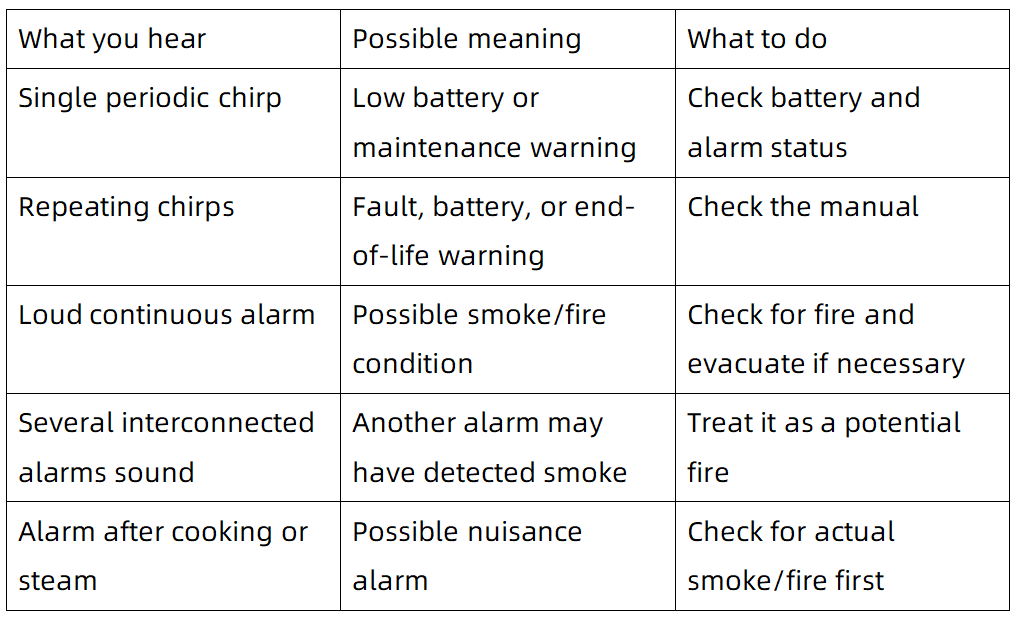
Never assume a loud alarm is “just a low battery.”
If there is smoke or fire, leave the home and call 911 from a safe location.
How to Stop a Smoke Alarm From Beeping
Once you have confirmed there is no fire, work through the following steps.
Step 1: Find the Alarm That Is Beeping
In a home with multiple smoke alarms, it can be surprisingly difficult to identify which unit is chirping.
Walk through the home and listen carefully.
Do not assume that the closest alarm is the source.
If the alarm has a replaceable battery, check whether it is low.
Replace it using the battery type specified by the manufacturer.
After replacement, press the test button according to the manufacturer’s instructions.
If the chirping continues, the problem may not be the battery.
Look at the manufacturing date on the back of the smoke alarm.
If the alarm is around 10 years old, replacement may be necessary.
This is particularly important when replacing the battery does not stop the chirping.
A smoke alarm can reach the end of its service life even when the battery still appears to work.
Dust and other contaminants can accumulate over time.
Inspect the alarm and clean it according to the manufacturer’s instructions.
Avoid spraying cleaners directly into the alarm.
Do not open the sensing chamber unless specifically instructed by the manufacturer.
Step 5: Check the Installation Environment
Consider whether the alarm is located near:
- A bathroom
- A kitchen
- A cooking appliance
- A humidifier
- An HVAC vent
- A window
- A source of dust or aerosols
Steam, cooking particles, humidity, and airflow can contribute to unwanted alarms.
If nuisance alarms continue, review the alarm’s installation location and the manufacturer’s placement requirements.
What If the Smoke Alarm Keeps Beeping After I Change the Battery?
If the battery has been replaced and the smoke alarm continues to chirp, possible causes include:
1. The alarm is reaching end of life
Check its manufacturing date.
2. The battery is installed incorrectly
Make sure the battery is installed in the correct orientation and is the type specified by the manufacturer.
3. The alarm has a fault
Some alarms use specific chirp and LED patterns to indicate a malfunction.
4. The alarm is contaminated
Dust or insects may be affecting the sensing system.
5. The problem is related to power
Hardwired smoke alarms may have backup batteries and can also be affected by power interruptions.
If the alarm continues to indicate a problem after following the manufacturer’s troubleshooting instructions, replace the alarm or contact the manufacturer for support.
What About Hardwired Smoke Alarms?
Hardwired smoke alarms are connected to the home’s electrical system, but many models also include a backup battery.
Therefore, a hardwired smoke alarm can still chirp because of:
- A low backup battery
- Power interruption
- Battery installation problems
- End-of-life condition
- Fault conditions
Do not disconnect a hardwired smoke alarm simply to stop the chirping.
If an electrical issue is suspected, consult a qualified professional when appropriate.
Should I Remove the Battery to Stop the Beeping?
No.
Removing the battery may stop the noise temporarily, but it also disables an important life-safety device.
If the smoke alarm is giving a low-battery warning, replace the battery.
If it has reached the end of its service life, replace the alarm.
If it has a fault, follow the manufacturer’s troubleshooting instructions or replace the alarm.
Never leave a smoke alarm intentionally disabled.
How Often Should You Test a Smoke Alarm?
Testing is an important part of smoke alarm maintenance.
NFPA recommends testing smoke alarms at least once a month using the test button.
Regular testing helps confirm that the alarm can produce its warning signal and that the device is functioning as expected.
Testing does not replace battery replacement or alarm replacement.
When Should You Replace a Smoke Alarm?
Consider replacing your smoke alarm when:
- It reaches the manufacturer’s stated service life
- It is approximately 10 years old
- The manufacturer recommends replacement
- It continues to indicate a fault
- It is damaged
- It cannot be reliably tested
- A sealed-battery alarm indicates that its battery has reached the end of its service life
For residential smoke alarms, 10 years is a commonly recommended replacement interval, but the manufacturer’s instructions should always take priority.
Choosing a Smoke Alarm for a North American Home
When purchasing a smoke alarm, consumers should look beyond price alone.
Important considerations include:
UL 217 Listing
UL 217 is the recognized safety standard for smoke alarms in North America.
Sensing Technology
Different smoke alarms use different sensing technologies and designs. Choose a product appropriate for the intended residential application.
Power Design
Consider whether you prefer:
- Replaceable batteries
- Sealed long-life batteries
- Hardwired power with battery backup
Service Life
Understand when the alarm should be replaced.
Maintenance Features
Some modern smoke alarms can provide clearer low-battery, fault, and end-of-life warnings.
The goal is not simply to find the loudest alarm.
The goal is to have a reliable smoke detection device that remains operational when your family needs it most.
Why is my smoke alarm beeping every 30 seconds?
A periodic chirp can indicate a low battery, end-of-life condition, fault, or another maintenance warning. The exact meaning depends on the model.
Why does my smoke alarm beep at night?
A weak battery is a common reason. Cooler nighttime temperatures can make a weak battery more likely to trigger its low-battery warning.
Why is my smoke alarm still beeping after I changed the battery?
The alarm may be reaching the end of its service life, have a fault, or require cleaning. Check the manufacturer’s troubleshooting instructions.
How do I make my smoke alarm stop chirping?
First determine why it is chirping. Replace a low battery, address environmental issues, clean the alarm according to the manufacturer’s instructions, or replace an aging/faulty alarm.
Do not intentionally disable a smoke alarm to stop chirping. Hardwired alarms should remain connected and functional.
How often should I replace my smoke alarm?
Many residential smoke alarms are recommended for replacement after approximately 10 years, but always follow the manufacturer’s stated service life.
A smoke alarm should not be treated as a device that you install once and forget.
For North American homes, reliable fire protection depends on three things:
Choose the right alarm.
Install it correctly.
Maintain it throughout its service life.
A UL 217-listed smoke alarm is designed to meet recognized safety and performance requirements, but even a certified alarm needs proper power, installation, testing, maintenance, and timely replacement.
So when your smoke alarm starts beeping, don’t just ask:
“How do I stop the noise?”
Ask:
“What is my smoke alarm trying to tell me?”
That small difference can help keep your home protected when it matters most.